
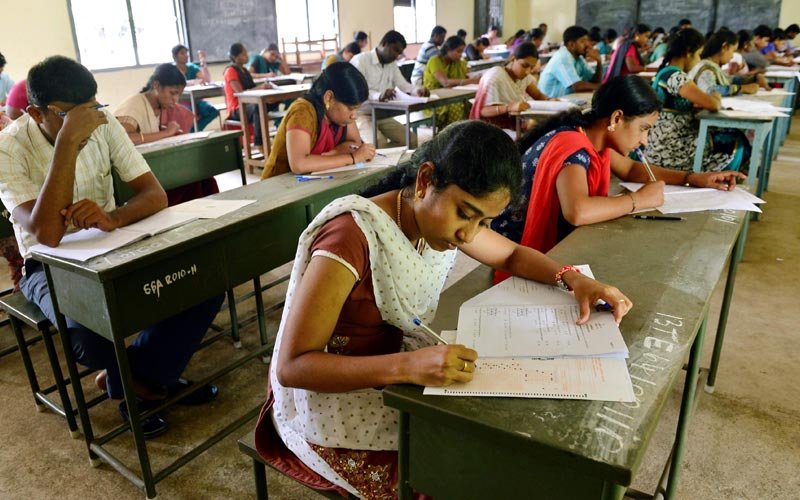
If you have been thinking about a government job, you are not alone. Every year, millions of people in India apply for government positions across central and state departments, public sector undertakings, railways, defence, banking, teaching, and dozens of other categories. The appeal is real and understandable. Job security, regular salary, pension benefits, social respect, and the stability that comes with working for the government are things that private sector jobs rarely offer at the same level.
But the government job market is not the same as it was five or even three years ago. Things are changing. The way vacancies are announced has changed. The way exams are conducted has changed. The types of roles being hired for are shifting. Technology is playing a bigger role in recruitment. And the competition, which was already intense, has become even more so in certain categories while new opportunities are opening up in others.
This blog is going to give you a clear, honest, up-to-date picture of the government job market. What is happening right now, what trends are shaping recruitment, which sectors are actively hiring, what challenges candidates face, and what you can do to improve your chances in this environment. All of it in simple, straightforward language.
The Demand for Government Jobs Has Never Been Higher
Let us start with the basic reality. The number of people seeking government employment in India continues to grow every year. When a central government notification announces even a few thousand vacancies, the number of applications that pour in can run into the millions. A recent Railway Recruitment Board notification drew over a crore applications for a relatively modest number of posts. State police and teacher recruitment notifications regularly see similar response volumes.
This demand is driven by several factors. The formal private sector, despite its size, does not create enough stable employment to absorb the number of educated young people entering the workforce each year. Salaries in many entry-level private roles, particularly outside major cities, are modest and come without the job security that government positions carry. The pandemic years reinforced this preference for stable employment when private sector layoffs affected large numbers of workers almost overnight while government employees largely continued without disruption.
The result is that competition for government positions at all levels has intensified over time. Understanding this competitive reality is not meant to discourage anyone but to help you approach your preparation and strategy with clear eyes.
What Is Changing in Government Recruitment
The government recruitment landscape has been undergoing significant changes in recent years and candidates who understand these shifts are better positioned to navigate them.
One of the most significant changes is the push toward common eligibility tests at both the central and state levels. The National Recruitment Agency was established with the specific goal of conducting a Common Eligibility Test that would serve as a single screening exam for multiple central government positions. The idea is to reduce the burden on candidates who currently have to prepare separately and pay separately for dozens of different exams. While implementation has taken longer than originally announced, the direction of travel is clearly toward consolidated, common examination frameworks.
At the state level, several states have moved toward or are moving toward similar consolidated approaches through their respective State Recruitment Boards. Understanding how your target state’s recruitment system is evolving is important because it affects which exams you need to prepare for and how transferable your preparation is across different opportunities.
The shift to online examination has become near-universal for competitive government exams. Written examinations that were previously conducted on paper across physical centres have largely moved to computer-based testing. This has consequences for candidates who are not comfortable with technology and has also changed how paper patterns and answer reviews work. If you are preparing for competitive exams and have not yet become comfortable with computer-based test interfaces, practising on them should be part of your preparation.
Document verification and background checks have become more rigorous across many departments. Cases of fraudulent credentials being used in previous years have led to stricter verification processes. Make sure your educational certificates, caste certificates if applicable, domicile documents, and identity documents are all accurate and in order well before you reach final selection stages.
Sectors That Are Actively Hiring
Despite the broad picture of intense competition, there are specific sectors within government employment that are seeing significant recruitment activity right now and are worth paying close attention to.
Defence and paramilitary recruitment continues to offer large numbers of vacancies annually. The Army, Navy, Air Force, CRPF, BSF, CISF, and other forces recruit regularly for both officer and other ranks positions. Physical fitness standards are a key component here alongside written tests, and candidates who start physical preparation early have a genuine advantage.
Railway recruitment through the Railway Recruitment Boards remains one of the largest sources of government employment in the country. From technical positions to non-technical roles, from group C to group D posts, railways hire across a very wide range of educational qualifications and skill levels. The sheer volume of the railway workforce means vacancies arise regularly even accounting for competitive pressure.
Banking sector recruitment through IBPS, SBI, and other public sector banks continues to offer opportunities for graduates, particularly those with comfort in numerical reasoning and English language skills. The banking sector has been investing in technology and the nature of roles is evolving toward more analytical and digital capabilities alongside traditional banking work.
Teaching positions across central and state government schools remain a large and relatively steady source of recruitment. CTET at the central level and State TET examinations at the state level create qualification pathways, and once qualified, candidates can apply to available positions in government schools. Teacher vacancies are particularly significant in states with large rural populations where demand for qualified teachers remains genuinely high.
Healthcare and public health recruitment has received stronger focus following the pandemic, with both central and state governments increasing hiring for doctors, nurses, paramedical staff, and public health workers. AYUSH-related positions have also expanded alongside allopathic roles in many states.
Technological and digital roles in government are an emerging and growing area that deserves specific mention. Central and state government departments are investing heavily in digital infrastructure, e-governance platforms, and data management systems. This is creating demand for candidates with technology backgrounds in areas that government recruitment did not traditionally focus on. Positions in NIC, various state IT departments, and technology-focused government bodies are worth tracking for candidates with engineering, computer science, or data-related backgrounds.
The Reality of Preparation in This Environment
Given the competition levels and the evolving nature of examinations, honest preparation strategy matters more than ever.
The most important thing to understand is that clearing competitive government exams requires sustained, systematic preparation rather than cramming. The candidates who consistently clear exams are not usually the most naturally gifted. They are the ones who are most consistent, who cover the syllabus thoroughly, who practise extensively with previous years’ papers and mock tests, and who manage their time and mental energy effectively over the preparation period.
Coaching institutes remain popular and some provide genuine value in terms of structured preparation, study materials, and mock test series. However, the presence of a coaching institute in your preparation does not replace the need for individual effort and self-driven practice. Many candidates who clear competitive exams are self-taught, using freely available resources including NCERT textbooks, online platforms, and previous years’ question papers. The coaching versus self-study decision should be based on your learning style, your financial situation, and what genuinely helps you prepare effectively, not on what everyone around you is doing.
Mock tests and previous years’ papers are the most valuable preparation resource available for any competitive examination. They tell you what the paper actually looks like, what kinds of questions appear repeatedly, where your weak areas are, and how to manage time under actual examination conditions. Candidates who spend all their preparation time reading and very little time practising under timed conditions consistently underperform relative to their knowledge level because they have not developed examination speed and accuracy.
Current affairs preparation has become increasingly important across almost all government competitive exams. Questions about government schemes, national and international events, appointments, awards, sports results, and economic developments appear regularly. Building a daily habit of reading one reliable newspaper and reviewing monthly current affairs compilations is more effective than trying to absorb large amounts of current affairs in the days before an exam.
Challenges Candidates Are Facing Right Now
It would not be honest to discuss the government job market without acknowledging the genuine challenges that many candidates are facing.
Exam delays and postponements have been a persistent issue, with various recruitment processes facing gaps between notification, examination, and final selection that sometimes stretch over several years. This creates real uncertainty for candidates who have invested significant time and energy in preparation and are waiting for processes to conclude. Managing your time and energy during long waits, maintaining preparation quality without burning out, and keeping your options open across multiple simultaneous opportunities are all coping strategies worth thinking about.
Age limits are a concern for candidates who have spent extended periods preparing and have seen processes delayed. Different examinations have different upper age limits and different relaxations for reserved categories. Understanding the specific age criteria for your target examinations and planning your preparation timeline accordingly is important. Advocacy for age limit relaxations in cases where processes have been significantly delayed is an ongoing conversation in the recruitment policy space.
Exam paper leaks have damaged confidence in certain recruitment processes and led to examinations being cancelled and rerun, which creates additional burden for well-prepared candidates who had nothing to do with the irregularities. Several state recruitment processes have faced these challenges in recent years. The response from regulatory bodies and courts has been to demand stronger systems and accountability, and there is genuine effort underway in many places to make examination security more robust.
Reservation policy and its implementation create complexity in government hiring that candidates need to understand for their own target examinations. Knowing which category of posts you are eligible for, what the reservation percentages are, and how merit lists and cutoffs work for your specific category in your target examination is basic information that should be part of your preparation rather than something you figure out after results are announced.
Practical Steps You Can Take Right Now
If you are actively pursuing government employment or considering it, here are straightforward things you can do right now to improve your position.
Identify your target examinations clearly rather than trying to prepare for everything simultaneously. Being focused on two or three examinations with significant overlap in their syllabi allows for much deeper and more effective preparation than spreading yourself thin across too many different syllabi and schedules.
Register on official examination notification portals. The Staff Selection Commission, Railway Recruitment Boards, UPSC, IBPS, and your relevant State Public Service Commission all have official websites and notification mechanisms. Set up alerts or check these regularly so you do not miss application windows.
Start or maintain physical fitness preparation if your target roles have a physical component. Physical fitness cannot be built quickly and is best developed through consistent training over months. Starting early means you arrive at physical tests genuinely prepared rather than scrambling in the weeks before.
Build your documentation readiness now. Gather your educational certificates, identity documents, category certificates, domicile certificates, and any other documents typically required in government applications. Know where everything is and make clear digital copies. Last-minute document problems are a preventable source of stress during application and selection processes.
Connect with communities of serious government exam aspirants, both online and in your area. Sharing preparation resources, current affairs updates, exam strategies, and moral support with people going through the same process adds genuine value to preparation and makes the often-long journey less isolating.
A Realistic and Honest Perspective
The government job market is real, the opportunities are real, and for the right candidates in the right roles, government employment genuinely delivers on its promise of security and stability. But getting there requires honest effort, strategic preparation, patience with slow and sometimes frustrating processes, and the resilience to keep going through setbacks.
Not every attempt will succeed. Most people who eventually clear competitive examinations did not clear them on their first try. Treating each attempt as a learning experience that improves your understanding of the examination and your own preparation gaps is a more useful mindset than treating unsuccessful attempts as failures.
The candidates who ultimately get through are the ones who prepare seriously, stay informed about changes in the recruitment landscape, keep their documentation and eligibility in order, and do not give up before they reach the opportunity they were working toward.
The government job market in India is large, it is changing, and it offers genuine paths to stable and meaningful employment for millions of people. Understanding it clearly is the first step toward navigating it successfully.