
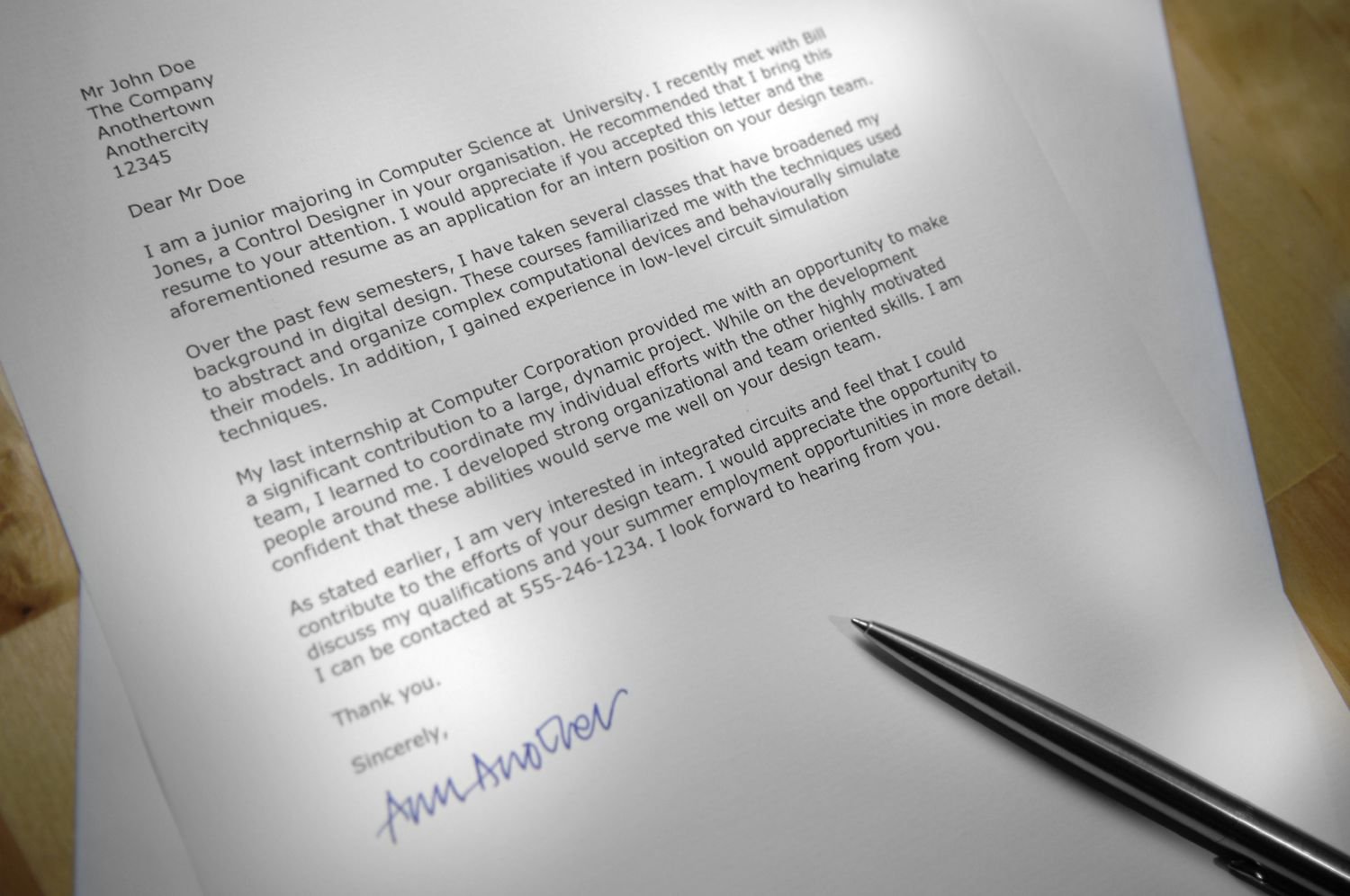
In the highly automated recruitment landscape of 2026, the death of the cover letter has been greatly exaggerated. While it is true that many swift, high-volume hiring processes have dispensed with them in favor of skills assessments and one-click applications, the cover letter has actually gained value in a specific, high-stakes context. It has evolved from a mandatory bureaucratic summary of your resume into a “strategic differentiator.” When a hiring manager is staring at three candidates who all have 95% skills matching scores from the AI screener, the cover letter is the tie-breaker. It is the only document where you can display personality, explain career pivots, and demonstrate “culture add” rather than just “culture fit.” Writing a cover letter today is less about summarizing your history and more about pitching a future value proposition. It requires a shift from the formal, stiff business letter of the past to a compelling, narrative-driven argument for why you are the missing piece of their puzzle. This guide explores how to craft a cover letter that survives the AI filters and resonates with the exhausted human on the other side of the screen.
The Shift from Summary to Storytelling
The most common mistake candidates make is using the cover letter to repeat their resume in sentence form. In 2026, this is a waste of digital real estate. Your resume already provides the “what” and the “when”; the cover letter exists to explain the “why” and the “how.” The modern cover letter is a piece of persuasive storytelling. It connects the dots that an algorithm cannot see. For example, if you are pivoting from journalism to data analysis, your resume might look disjointed. A cover letter allows you to frame this narrative: “My decade in journalism taught me how to ask the right questions; my recent certification in Python allows me to answer them at scale.” This narrative arc transforms a potential red flag (lack of traditional experience) into a unique selling point (hybrid skill set). You must identify the central theme of your career—whether it is “fixing broken processes,” “scaling teams in chaos,” or “translating tech to non-tech”—and use the cover letter to prove that this theme aligns perfectly with the company’s current pain points.
The “Hook” and the “Pain Point” Opening
The standard opening—”I am writing to apply for [Role] at [Company]”—is the fastest way to bore a reader who scans hundreds of applications a week. In 2026, you need a “Hook.” Start with a sentence that demonstrates you understand their business, their culture, or their specific challenge. A strong opening might look like: “After reading your Q3 report on the expansion into the APAC region, I realized my experience launching three SaaS products in Singapore could solve the regulatory hurdles you are currently facing.” This is called the “Pain Point Opening.” It immediately positions you as a solution to a problem they are losing sleep over. Alternatively, use a “Connection Hook” if you have been referred: “Jane Doe, your Senior Product Manager, suggested I contact you regarding the open DevOps role, as my work on the Alpha Project mirrors the infrastructure challenges your team is tackling.” By anchoring your application in their reality, not just your desire for a job, you force them to pay attention.
Writing for the “Hybrid” Audience: AI and Human
Writing in 2026 requires a “dual-track” approach. First, your letter must pass the AI sentiment analysis. Many “Contextual AI” tools scan cover letters for enthusiasm, specific keywords, and soft skills traits like “adaptability” or “collaboration.” If your letter is generic or overly negative, it may lower your ranking. To satisfy the AI, mirror the language of the job description. If they ask for “stakeholder management,” use that exact phrase, not “talking to bosses.” However, once you pass the AI, you must write for the human. Humans hate buzzwords. They want authenticity. Avoid corporate fluff like “synergy,” “thought leader,” or “go-getter.” Instead, write like a human speaking to another human. Use active verbs and specific anecdotes. “I led a team” is okay; “I rallied a disheartened team of six engineers to deliver the Beta launch two weeks early” is compelling. The balance is to be keyword-rich but tone-authentic.
The “T-Shaped” Evidence Structure
The body of your cover letter should not be a chronological list of jobs. Instead, organize it around 2-3 “Evidence Blocks” that prove you can do the job. In 2026, the most effective structure is often “T-Shaped”—showing deep expertise in the core requirement and broad ability to collaborate. For the first paragraph, focus on the “Hard Skill” that is non-negotiable for the role. “In my role at TechCorp, I didn’t just manage the database; I re-architected the SQL queries to reduce latency by 40%, directly improving the customer checkout experience.” This satisfies the technical hiring manager. For the second paragraph, focus on the “Soft Skill” or “Power Skill” that ensures you fit the team. “Beyond the code, I acted as the liaison between engineering and sales, translating technical constraints into client-facing roadmaps that helped close $200k in new business.” This structure proves you are a specialist who understands the business context, a highly prized combination in the modern workforce.
addressing Employment Gaps and “Fractional” Work
The stigma around employment gaps has largely faded, but they still require explanation. The cover letter is the perfect place to reframe a gap as a period of growth. “During my career break in 2024, I didn’t just recharge; I completed an intensive 12-week bootcamp in Generative AI orchestration, building three proprietary agents that I now use to automate my workflow.” This turns a “gap” into a “sabbatical for upskilling.” Similarly, if you have been working as a freelancer or “Fractional Executive,” use the cover letter to frame this as an advantage. “Working with five different startups over the last two years has given me a unique ‘cross-pollinated’ perspective on growth strategies that a single-company tenure could not provide.” You are positioning your non-traditional path as a source of diverse, high-velocity experience that the company can now access at a full-time rate.
The “Value-Add” Close
Do not end your letter with a passive “I look forward to hearing from you.” End with a “Call to Action” or a “Value-Add.” In 2026, confident candidates often propose the next step. “I have some ideas on how your team could leverage the new compliancy protocols to speed up deployment, and I’d love to share them in a brief chat.” Or, “I’ve attached a rough audit I did of your current landing page with three quick wins you could implement today.” This approach, sometimes called the “Briefcase Technique,” shows that you are already doing the work before you are hired. It lowers the risk for the hiring manager because they can see a sample of your thinking. Even if they don’t hire you, they will remember the candidate who offered value upfront rather than just asking for a paycheck.
Visual Formatting and “Skimmability”
Just like the resume, the cover letter must be visually accessible. A wall of text is a rejection sentence. Keep your paragraphs short—no more than 3-4 sentences. Use bullet points in the middle section to break up the text and highlight metrics. For example: “Here is a snapshot of what I delivered in my last role: * Scaled user base by 200% in 6 months. * Reduced churn by 5% via automated onboarding. * Managed a remote team of 10 across 4 time zones.” This allows a busy recruiter to scan the document in five seconds and still catch the highlights. Use a clean, sans-serif font like Inter or Arial, and ensure there is plenty of white space. If you are sending the cover letter as the body of an email (which is common for startups), keep it even shorter—under 200 words—and link to your portfolio or LinkedIn profile for the “deep dive.”
The Tone Check: Confidence vs. Arrogance
Finding the right tone is the hardest part of writing a cover letter. You want to sound confident but not arrogant, humble but not subservient. In 2026, the preferred tone is “Professional Peer.” Write as if you are already a colleague discussing a shared project, not a subordinate begging for a chance. Avoid phrases like “I hope you will consider me” or “I believe I might be a good fit.” Replace them with “I am confident my background in X will allow me to deliver Y” or “I am excited about the possibility of bringing my expertise in Z to your team.” However, be careful not to cross into lecturing. Do not say “Your current strategy is wrong.” Say “I see an opportunity to optimize your current strategy by…” This subtle shift shows respect for their current efforts while offering your expertise to improve them.
Customization at Scale: Using AI Wisely
It is impossible to write a scratch cover letter for every single application if you are applying to 50 jobs. This is where “Agentic AI” becomes your writing partner. You can use tools like ChatGPT or specialized career agents to generate a first draft. The prompt matters: “Act as a senior copywriter. Write a 300-word cover letter for a [Job Title] role at [Company] based on my attached resume. Focus on my experience in [Skill A] and [Skill B]. Match the tone of the company’s ‘About Us’ page.” Once the AI generates the draft, you must edit it. AI often sounds robotic or overly flowery (“I am thrilled to embark on this journey”). Cut the adjectives. Insert your specific anecdotes. Check for “hallucinations” (things you didn’t actually do). The goal is to use AI to get you 80% of the way there, saving your mental energy for the final 20% of personalization that actually sells you.
Conclusion: The Letter as a Sample of Work
Ultimately, your cover letter is a work sample. It demonstrates your ability to communicate clearly, to persuade, to organize your thoughts, and to research a target. If you are applying for a communications role, a typo-ridden letter is a disqualifier. If you are applying for a data role, a vague letter without numbers is a red flag. Treat the cover letter not as a form to be filled out, but as the first deliverable of the job you want. In a market flooded with generic, AI-generated noise, a thoughtful, human, and strategic cover letter is a signal of quality that smart hiring managers are desperate to find. It is your voice in the room before you even get there.