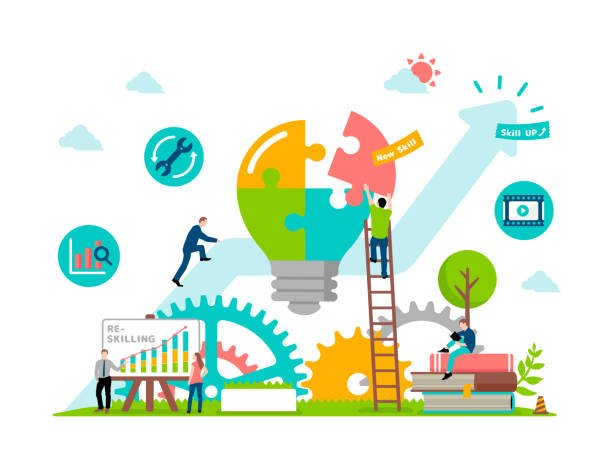
The landscape of professional development has fundamentally shifted from a model of episodic education to one of continuous, fluid adaptation. In the burgeoning economy of 2026, the concept of “finishing” one’s education is an obsolete relic of the 20th century. We are currently living through a period of “Skill Compression,” where the useful life of a technical skill has shrunk from approximately ten years to fewer than four. This acceleration is driven by the convergence of generative artificial intelligence, decentralized workforce models, and the rapid digitization of traditional industries. For the modern professional, upskilling is no longer a path to promotion; it is the baseline requirement for survival. The ability to unlearn outdated methodologies and rapidly assimilate new competencies—often referred to as “Learning Agility”—has surpassed IQ as the primary predictor of long-term career success. This comprehensive guide explores the mechanics of skill acquisition in the modern era, identifying not just what to learn, but how to learn it effectively in a distracted, high-velocity world.
The New ROI of Learning
Historically, the Return on Investment (ROI) for education was calculated over a lifetime. You got a degree in your 20s, and it paid dividends until your 60s. Today, the ROI is calculated in months. A specific certification in AI prompt engineering or blockchain analytics can yield an immediate salary bump or a freelance contract within weeks of completion. This shift has democratized opportunity but also increased the pressure on individuals to manage their own “Human Capital” portfolios. We must view our skill sets like an investment portfolio: some skills are stable “blue-chip” assets (like leadership and writing), while others are volatile “growth stocks” (like specific software tools or coding languages) that require constant monitoring and updating.
The Collapse of the “Degree Monopoly”
For decades, universities held a monopoly on credentialing. That monopoly has effectively fractured. While foundational degrees remain valuable for signaling persistence and baseline cognition, they are insufficient for verified competency in specific, fast-moving fields. Employers in 2026 are increasingly moving toward “Skills-Based Hiring,” where a portfolio of verified micro-credentials—short, focused certifications issued by industry leaders like Google, Amazon, or specialized academies—holds as much weight as a traditional diploma. This transition allows professionals to pivot careers without the burden of multi-year tuition debts, fostering a more dynamic and responsive labor market.
The Rise of the “T-Shaped” and “M-Shaped” Professional
The debate between “generalist” and “specialist” has been settled: the winner is the hybrid. The “T-Shaped” professional possesses deep expertise in one specific vertical (the vertical bar of the T) coupled with broad literacy across multiple disciplines (the horizontal bar). However, in 2026, we are seeing the evolution toward the “M-Shaped” professional—individuals who have deep expertise in multiple domains. For instance, a software developer who also has deep expertise in user experience design and a solid grounding in financial compliance is an “M-Shaped” asset. These individuals act as bridges between siloed departments, translating constraints and opportunities across the organization.
Mastering Artificial Intelligence Literacy
It is impossible to discuss upskilling in 2026 without addressing the elephant in the room: Artificial Intelligence. AI literacy is no longer a “tech skill”; it is a universal business competency comparable to reading or writing. This goes beyond knowing how to chat with a bot. True AI literacy involves understanding the “Model Context Protocol,” knowing how to chain different AI agents together to execute complex workflows, and understanding the ethical and legal implications of AI-generated content. Professionals must learn how to audit AI outputs for hallucinations and bias, effectively becoming the “Human-in-the-Loop” that ensures quality and safety.
The Renaissance of “Deep Work”
As AI automates shallow, repetitive tasks (data entry, basic scheduling, email triage), the value of “Deep Work”—the ability to focus without distraction on a cognitively demanding task—has skyrocketed. Attention is the new oil. Developing the skill of sustained concentration is a competitive advantage in an economy designed to distract you. This involves mastering techniques like “Time Blocking,” “Digital Minimalism,” and “Flow State” induction. Professionals who can lock themselves in a room for four hours and produce a strategic breakthrough are infinitely more valuable than those who spend eight hours reacting to slack notifications.
Data Fluency for Non-Data Roles
Data is the linguistic currency of the modern enterprise. You do not need to be a data scientist, but you must be “Data Fluent.” This means having the ability to read a dashboard, understand statistical significance, and question the source of data points. Marketing managers need to understand attribution modeling; HR professionals need to understand people analytics; sales leaders need to understand predictive forecasting. The skill here is “Data Storytelling”—the ability to take raw numbers and weave them into a compelling narrative that drives decision-making. Tools like Tableau and Power BI are the canvas, but your analytical mind is the brush.
Emotional Intelligence (EQ) as a Hard Skill
As machines take over logic and calculation, the “Human Stack”—empathy, negotiation, conflict resolution, and persuasion—becomes the unassailable fortress of human employment. Emotional Intelligence (EQ) is the ability to perceive, control, and evaluate emotions. In a remote or hybrid work environment, where body language and tone are often lost in transmission, high EQ is essential for building trust and cohesion. Leaders must learn to manage “Digital Empathy,” sensing burnout or disengagement through text-based communication and intervening proactively.
The Art of Unlearning
Perhaps the most difficult skill to master is “Unlearning.” This is the process of discarding obsolete mental models and habits that no longer serve you. For a senior developer, this might mean unlearning a legacy coding practice that makes modern cloud-native deployment difficult. For a manager, it might mean unlearning the “command and control” style of leadership in favor of “servant leadership.” Unlearning requires humility and the psychological safety to admit that what made you successful in the past is not what will make you successful in the future. It involves actively seeking “disconfirming evidence” to challenge your own biases.
Learning in the Flow of Work
The old model of “Stop working to learn” (e.g., going away for a week-long seminar) is being replaced by “Learning in the flow of work.” This involves using AI tutors and augmented reality overlays to provide just-in-time information exactly when you need it. Imagine a technician repairing a wind turbine with smart glasses that project the schematic onto the part they are looking at, or a coder using an AI pair programmer that suggests optimizations in real-time. Upskilling becomes a seamless part of the daily workflow rather than an external interruption.
Micro-Learning and Spaced Repetition
Cognitive science tells us that the human brain forgets 50% of new information within an hour if it is not reinforced. To combat this “Forgetting Curve,” modern upskilling relies on “Micro-Learning”—short, focused bursts of education (5-10 minutes) consumed daily. Combined with “Spaced Repetition”—reviewing material at increasing intervals over time—this method ensures long-term retention. Apps and platforms that gamify this process are becoming standard tools for professionals who want to learn a language, a coding syntax, or a compliance regulation during their commute.
Building a Personal Learning Network (PLN)
You cannot learn everything alone. A Personal Learning Network (PLN) is a curated group of peers, mentors, and thought leaders who act as your external brain. In 2026, this network is often decentralized and digital, existing across private Discord servers, niche newsletters, and professional DAOs (Decentralized Autonomous Organizations). Engaging with a PLN allows you to crowdsource solutions to complex problems and stay ahead of trends that have not yet hit the mainstream media. The skill here is “Curation”—filtering the noise to find the signal.
The Importance of Cross-Cultural Competence
Globalization has not retreated; it has digitized. Teams are now distributed across time zones and cultures. “Cross-Cultural Competence” (CQ) is the ability to work effectively with people from different cultural backgrounds. This involves understanding nuances in communication styles, hierarchy, and decision-making. A manager in New York must understand that silence in a meeting with a Tokyo team might signal thoughtful consideration, not disagreement. CQ prevents costly misunderstandings and fosters a truly inclusive global workforce.
Project Management for Everyone
“Project Management” is no longer just a job title; it is a universal skill set. Every professional manages projects, whether it is a marketing campaign, a software launch, or an office move. Understanding the fundamentals of Agile, Scrum, and Kanban methodologies allows individuals to break massive goals into manageable sprints, visualize bottlenecks, and deliver value iteratively. The ability to use tools like Asana, Jira, or Monday.com is as basic as using email.
Financial Literacy and Business Acumen
To advance in any career, you must understand how your company makes money. “Business Acumen” is the understanding of how a business operates and makes a profit. This includes reading a P&L statement, understanding margins, and knowing the cost of customer acquisition. When you can link your daily tasks to the company’s bottom line, you become a strategic partner rather than a cost center. This skill is crucial for negotiating budgets, justifying headcounts, and securing promotions.
Public Speaking and Presentation Skills
Great ideas die in poor presentations. The ability to stand up (or sit in front of a webcam) and articulate a vision clearly and persuasively is a force multiplier for all other skills. This includes mastering the “Visual Rhetoric” of slide design—moving away from walls of text to image-rich, data-backed storytelling. It also involves mastering the “Digital Stage,” knowing how to maintain eye contact with a camera lens, modulate your voice for a microphone, and engage a remote audience that is tempted to multitask.
Critical Thinking and Logic
in an era of “Deepfakes” and algorithmic bias, Critical Thinking is the ultimate defense mechanism. This involves the ability to analyze information objectively and make a reasoned judgment. It requires skepticism of sources, the identification of logical fallacies, and the ability to separate fact from opinion. Professionals must act as “Information Architects,” structuring valid arguments and identifying weak points in proposed strategies. This skill prevents organizations from chasing hype cycles and making ruinous strategic errors.
Sustainability and Green Skills
The “Green Economy” is impacting every sector. “Green Skills” are not just for environmental scientists; they are for supply chain managers who need to source sustainable materials, for architects designing energy-efficient buildings, and for financiers assessing climate risk in investment portfolios. Understanding the principles of the Circular Economy—where waste is minimized and resources are reused—is becoming a core component of operational excellence.
Negotiation and Conflict Resolution
Business is a series of negotiations—for resources, for deadlines, for salaries, and for contracts. The skill of “Integrative Negotiation” (Win-Win) focuses on expanding the pie rather than just dividing it. It requires deep listening to understand the other party’s underlying interests rather than just their stated positions. Similarly, conflict resolution skills are vital for navigating internal politics and ensuring that creative friction does not devolve into toxic dysfunction.
The Role of Mentorship and Reverse Mentorship
The traditional model of older mentors teaching younger mentees is being supplemented by “Reverse Mentorship.” This is where younger employees mentor senior executives on emerging trends like Gen Z consumer behavior, TikTok trends, or new digital tools. participating in both sides of this equation maximizes learning. Being a mentor solidifies your own knowledge (the “Protégé Effect”), while being a mentee provides you with wisdom and institutional knowledge that cannot be Googled.
Self-Regulation and Stress Management
The pace of change in 2026 is cognitively exhausting. “Self-Regulation” is the ability to monitor your own energy levels and intervene before burnout occurs. This involves setting boundaries on availability, prioritizing sleep as a performance enhancer, and engaging in non-digital hobbies to rest the brain’s executive function. Resilience is not about enduring pain; it is about how quickly you recharge. Employers are increasingly viewing sustainable work practices as a key component of high performance.
Cybersecurity Awareness
Cybersecurity is everyone’s responsibility. The “Human Firewall” is the last line of defense against phishing, social engineering, and ransomware attacks. Upskilling in this area involves understanding the psychology of cyberattacks, knowing how to secure personal devices, and practicing good “Data Hygiene” (password management, multi-factor authentication). As remote work expands the attack surface of the organization, security literacy becomes a condition of employment.
Creativity and Innovation
Creativity is often misunderstood as an artistic talent; in business, it is a disciplined process of solving problems in novel ways. Skills like “Design Thinking”—empathizing with the user, defining the problem, ideating, prototyping, and testing—provide a framework for innovation. This allows teams to fail fast and cheap, iterating toward a solution that actually meets a market need. In an AI world, the machine can generate the options, but the human must provide the creative spark and the curatorial eye.
Adaptability Quotient (AQ)
We talk about IQ (Intelligence Quotient) and EQ (Emotional Intelligence), but AQ (Adaptability Quotient) is the metric of the future. AQ measures your ability to thrive in an environment of constant change. It involves “unfreezing” your current mindset, navigating the transition, and “refreezing” in the new state. High AQ individuals view change as an experiment rather than a threat. They are the first to adopt new tools and the first to pivot when a strategy fails. Cultivating AQ involves deliberately exposing yourself to new experiences and uncomfortable situations to build tolerance for ambiguity.
Personal Branding and Digital Presence
In the gig economy and the lattice career path, your reputation is your resume. “Personal Branding” is the strategic management of how you are perceived by the market. This involves showcasing your work, sharing your learning journey publicly (“Building in Public”), and contributing value to your professional community. It is not about vanity; it is about discoverability. If a recruiter searches for an expert in your field, do you show up? A strong personal brand attracts opportunities, allowing you to stop chasing jobs and start selecting offers.
Conclusion: The Infinite Game
Skill development in 2026 is not a finite game with a winner and a loser; it is an infinite game where the goal is simply to keep playing. The landscape will continue to shift, new technologies will emerge, and old industries will die. The only hedge against this uncertainty is curiosity. The professionals who thrive will be those who fall in love with the process of learning itself, who wake up every day a little bit dumber than they will be when they go to sleep. They understand that their current knowledge is a depreciating asset, and their capacity to learn is their only appreciating asset. By auditing your skills regularly, leveraging technology to learn faster, and nurturing your human capabilities, you can build a career that is not only resilient to change but energized by it. The future belongs to the learners.