
The global compensation landscape of 2026 has stabilized into a complex, multi-layered environment that looks radically different from the volatile post-pandemic years. We have officially entered the era of the “Skills-First Economy,” where traditional tenure and job titles are rapidly losing their power as the primary determinants of salary. Instead, compensation strategies are being rewritten by three massive forces: the stabilization of inflation allowing for real wage growth, the explosive premium placed on Artificial Intelligence literacy, and the rigorous enforcement of pay transparency laws across major global markets. For human resources leaders, executives, and job seekers, the playbook has changed. Understanding these shifts is not merely about benchmarking numbers; it is about understanding the new psychology of value in the workplace. This comprehensive analysis explores every facet of the 2026 compensation ecosystem, from global regional variances to the granular details of executive equity packages.
Global Economic Context: The Return of Real Wage Growth
The End of the “Great Inflation” Erasion
For the first time since the early 2020s, employees across most major economies are experiencing “real” wage growth—meaning their salary increases are finally outpacing inflation. In 2023 and 2024, a 4% raise often felt like a pay cut due to soaring costs of living. In 2026, however, with global inflation largely tamed and hovering near central bank targets of 2-2.5%, a projected global average salary increase of 4.7% represents a tangible improvement in purchasing power. This shift has improved employee sentiment, reducing the “quiet quitting” phenomenon that plagued previous years. However, companies remain cautious. The days of double-digit blanket adjustments are over. Organizations are hoarding cash to invest in technology, resulting in a “barbell” approach to raises: significant jumps for high performers and mission-critical roles, and modest cost-of-living adjustments for the middle of the pack.
Regional Variance: The Asia-Pacific Boom
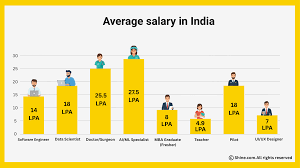
While Western economies settle into a pattern of steady, low-single-digit growth (roughly 3.5% to 4.2% in the US and Western Europe), the Asia-Pacific region continues to be the engine of aggressive salary expansion. India, specifically, remains a global outlier with projected salary increases touching 9% to 9.5% for 2026. This is driven not just by inflation, but by a fierce talent war in the manufacturing, semiconductor, and GCC (Global Capability Center) sectors. Vietnam and the Philippines are also seeing robust growth as supply chains continue to diversify away from China. For multinational corporations, this creates a complex budgeting challenge: a flat global increase policy is no longer viable. A 4% raise that delights an employee in Germany might lead to immediate attrition for a software engineer in Bangalore.
The Artificial Intelligence Premium
The Rise of the “AI-Augmented” Pay Band
The most disruptive trend in 2026 compensation is the formalization of the “AI Premium.” We are no longer just talking about data scientists. We are seeing a distinct bifurcation in salary bands for non-technical roles based on AI proficiency. A marketing manager who can demonstrate proficiency in using agentic AI tools to automate campaign workflows is, on average, commanding a starting salary 12% to 15% higher than a traditional marketing manager. This “skills differential” is creating tension within organizations, as new hires with these specific competencies are often brought in at salaries higher than tenured managers. Compensation committees are scrambling to create new job codes—such as “AI Operations Specialist” or “Prompt Engineer II”—to justify these pay discrepancies without violating internal equity policies.
Engineering Salaries: The Specialist vs. Generalist Gap
In the software engineering domain, the “learn to code” gold rush has cooled significantly for generalists. Entry-level coding salaries have stagnated as AI tools automate basic boilerplate code generation. However, the ceiling for specialized talent has blasted through previous roofs. Engineers capable of fine-tuning Large Language Models (LLMs), managing vector databases, or architecting “Agentic” workflows are seeing salary offers that rival professional athletes in the tech hubs of Silicon Valley, London, and Tel Aviv. The gap between a “Junior Java Developer” and an “AI Systems Architect” has widened into a chasm. Companies are finding it more cost-effective to pay one AI architect $350,000 than to hire three generalist developers at $110,000 each, fundamentally altering headcount planning and payroll distribution.
Pay Transparency and Legal Compliance
The Impact of the EU Pay Transparency Directive
By mid-2026, the European Union’s Pay Transparency Directive is in full effect, and its ripple effects are being felt globally. Companies operating in the EU must now disclose salary ranges for all advertised positions and, crucially, provide existing employees with information on average pay levels broken down by gender for their category of work. This has forced a massive “correction” in payroll budgets. Many organizations have spent the first half of 2026 conducting “pay equity audits” and raising the salaries of underpaid tenured staff to avoid the reputational and legal risks of a discrepancy becoming public. The “black box” of salary negotiation is gone. Candidates in Europe now walk into interviews knowing exactly where they stand, shifting leverage decisively in their favor.
The Spread of US Salary Transparency Laws
In the United States, the patchwork of transparency laws has effectively created a national standard. With California, New York, Washington, and now states in the Midwest requiring salary ranges in job postings, national employers have largely capitulated to a single transparency policy. You can no longer hide the salary for a remote role. This has led to “wage compression,” where the published ranges for new hires impinge on the salaries of senior staff. To combat this, smart companies are moving toward “narrow band” postings. Instead of posting a useless range like “$80k – $180k,” which frustrates candidates, competitive firms are posting “$110k – $130k” to attract serious talent, effectively forcing them to have clearer internal budgeting before they ever open a requisition.
Remote Work and Geographic Pay differentials
The “Nationalization” of High-End Salaries
The debate over “location-based pay” has settled into a predictable but important pattern for 2026. For top-tier, high-impact roles (e.g., Senior Cybersecurity Analysts, AI Researchers, CFOs), geography is becoming irrelevant. A company based in San Francisco will pay San Francisco rates to a remote expert in Ohio because the talent pool for these roles is national, not local. The “discount” for living in a low-cost area has all but vanished for the top 5% of the workforce. If you have a rare skill, you command a national market rate regardless of your zip code. This has been a boon for wealth distribution, pumping high-tech salaries into secondary and tertiary markets.
The “Return-to-Office” (RTO) Tax
Conversely, a new phenomenon has emerged for roles requiring physical presence: the “RTO Tax.” Companies enforcing strict 5-day in-office mandates are finding they must pay a premium—often calculated at 10% to 20% above market rate—to attract talent that has grown accustomed to flexibility. In job interviews, “hybrid flexibility” is now treated as a distinct compensation component, monetized by candidates. Surveys show that nearly 60% of employees would decline a higher-paying job if it required a full-time return to the office. Consequently, cash-strapped startups are using “radical flexibility” (e.g., 4-day workweeks, work-from-anywhere policies) as a substitute for top-tier salaries, effectively competing for talent using time as currency rather than just money.
Benefits and The Total Rewards Package
The Rise of the “Wellness Wallet”
The era of the “one-size-fits-all” benefits package is over. In 2026, the trend is toward hyper-personalization via “lifestyle spending accounts” or “wellness wallets.” Employers are allocating a set stipend (e.g., $2,000 annually) that employees can spend on a menu of approved options. A Gen Z employee might use this for student loan repayment or pet insurance, while a Gen X employee might allocate it to eldercare support or financial planning services. This flexibility allows companies to control costs while increasing the perceived value of the compensation package. It shifts the narrative from “here is what we give you” to “here is money to support your specific life stage.”
Healthcare Costs and Mental Health Mandates
Healthcare premiums in the US have spiked again, driven by the widespread adoption of high-cost GLP-1 weight-loss drugs and the rising cost of specialized care. Employers are absorbing some of this, but are also demanding more from their plans. Mental health coverage has transitioned from a “perk” to a core necessity. Comprehensive access to therapy and mental health apps is now a baseline expectation in the tech, finance, and professional services sectors. Excluding these benefits is viewed as a red flag by candidates, equivalent to offering a job without dental coverage a decade ago.
Industry-Specific Salary Trends
Financial Services and Fintech
In the financial sector, 2026 is seeing a restructuring of the bonus culture. Investment banks, chastened by the volatility of previous years, are capping cash bonuses and moving more compensation into deferred stock units with longer vesting periods (3-5 years). This is designed to retain talent and discourage risky short-term behavior. However, the Fintech sector remains a wild west of compensation, with startups offering aggressive equity packages to lure talent away from traditional banks. The “risk premium” for joining a Fintech has increased, meaning base salaries in this sector are often higher than in established banks to compensate for the volatility.
Healthcare and Nursing
The healthcare sector continues to face a chronic labor shortage, keeping wages elevated. While the astronomical “travel nurse” rates of the pandemic era have subsided, the baseline salary for registered nurses (RNs) and specialized technicians remains permanently reset at a higher level (roughly 20-30% higher than 2019 baselines). Hospitals are increasingly offering “signing bonuses” and “retention bonuses” rather than just base salary hikes to manage their long-term fixed costs while still attracting staff.
Manufacturing and “Blue-Collar” Tech
A surprising bright spot in 2026 is the manufacturing sector, particularly in advanced electronics and green energy. The “green collar” workforce—technicians who maintain wind turbines, install solar panels, or operate EV battery plants—is seeing wage growth that outpaces many white-collar roles. As onshoring initiatives in the US and Europe mature, the scarcity of skilled trade labor has driven up hourly wages significantly. It is becoming common for skilled manufacturing technicians to earn six-figure incomes with overtime, challenging the traditional “degree vs. trade” salary hierarchy.
Executive Compensation and Equity
ESG-Linked Executive Pay
At the C-suite level, shareholder activism has fundamentally altered pay structures. It is now standard for a significant portion of executive variable pay (bonuses and stock grants) to be tied to Environmental, Social, and Governance (ESG) targets. A CEO might lose 15% of their potential bonus if diversity hiring targets are missed or if carbon reduction milestones are not met. This links executive wallets directly to corporate responsibility, moving ESG from a marketing slide to a payroll reality.
The Shift to Performance Share Units (PSUs)
Simple stock options are falling out of favor. In 2026, Performance Share Units (PSUs) are the dominant vehicle for executive equity. These units only vest if the company hits specific financial metrics (like EBITDA targets or relative Total Shareholder Return) over a multi-year period. This “pay-for-performance” model is being pushed aggressively by institutional investors who want to ensure that executive wealth is not just a result of a rising tide in the stock market, but of actual operational excellence.
The Gig Economy and Freelance Rates
The Fractional Executive Boom
The gig economy has moved up the corporate ladder. We are seeing a boom in “Fractional Executives”—experienced CFOs, CMOs, and CTOs who work for three or four companies simultaneously rather than one. This allows them to command high daily rates while giving companies access to top-tier leadership without the full-time price tag (and severance risk). Compensation for these roles is calculated on a retainer basis, and when annualized, often exceeds the salary of a full-time equivalent, reflecting the premium for flexibility and immediate expertise.
Freelance Rate Inflation
Freelance rates for specialized skills (video editing, blockchain development, grant writing) are rising faster than full-time wages. Freelancers are becoming savvy about pricing in their own benefits, taxes, and inflation. Companies relying on a “cheap” gig workforce are finding that quality talent now commands a premium. The “arbitrage” of hiring cheap freelancers is disappearing for high-skill work, forcing companies to budget for contractors with the same rigor as they do for full-time headcount.
Negotiation Strategies for 2026
Data-Driven Leverage
For candidates, the key to salary negotiation in 2026 is data. With transparency laws making ranges public, candidates are expected to come to the table with specific numbers. The conversation has shifted from “what are you currently earning?” (a question now illegal in many jurisdictions) to “what is the market rate for this skill set?” Candidates who can cite salary data from competitors or industry reports have significantly more leverage.
Negotiating Beyond the Base
With base salary budgets tight, savvy negotiators are focusing on the “fringes.” Signing bonuses, relocation packages, additional paid time off, and education stipends are the new battleground. Since these are often one-time costs or non-cash benefits, hiring managers have more discretion to approve them than they do to break the base salary band. “Upskilling clauses”—where the employer pays for a specific certification or degree—are becoming a popular negotiation chip for ambitious professionals.
Conclusion: The Era of Precision Compensation
The overarching theme of salary trends in 2026 is precision. The “peanut butter approach”—spreading a 3% raise evenly across the entire organization—is dead. Winning organizations are using compensation as a surgical tool: cutting costs on commoditized roles while investing aggressively in the skills of the future. They are rectifying pay inequities to ensure compliance and offering benefits packages that acknowledge the human needs of a diverse workforce. For employees, the message is clear: your earning potential is no longer tied to your tenure, but to your adaptability and your specific skill stack. In a market that pays a premium for the new, the niche, and the verified, the most profitable investment is self-education. As we move through 2026, the question is not “what is the job paying?” but “what is this specific combination of skills worth in the open market?” The answer, increasingly, is that it is worth whatever you can demonstrate you can build with it.