
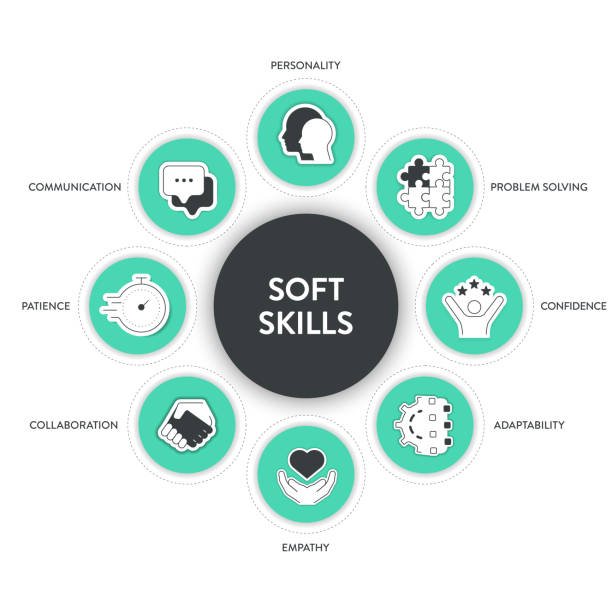
The terminology of the workplace has undergone a necessary correction. For decades, interpersonal and cognitive abilities were dismissed as “soft skills”—a label that implied they were optional, secondary, or easy to acquire. In the economy of 2026, this hierarchy has been inverted. As Artificial Intelligence and agentic workflows commoditize technical execution—writing code, generating reports, and analyzing data—the value of the “Human Stack” has skyrocketed. We are no longer talking about soft skills; we are talking about “Power Skills.” These are the non-automatable competencies that allow professionals to navigate ambiguity, lead with empathy, and bridge the gap between algorithmic logic and human experience. In a world where a machine can answer almost any question, the premium shifts to the human who can ask the right question. This guide explores the critical domains of soft skill development required to thrive in the modern, hybrid, and AI-augmented workforce.
The Cognitive Revolution: Critical Thinking and Adaptability
The Skill of “AI Audit” and Critical Evaluation
In 2026, Critical Thinking has evolved from a general academic concept to a specific daily practice: the ability to audit AI. With Generative AI producing confident but occasionally hallucinated outputs, professionals must act as the “Human-in-the-Loop.” This requires a skeptical mindset that validates sources, detects algorithmic bias, and questions the logic of machine-generated strategies. Developing this skill involves practicing “Epistemic Humility”—admitting what you do not know—and rigorously cross-referencing AI insights with human intuition and verified data.
Adaptability Quotient (AQ) and The Art of Unlearning
The pace of technological change means that “best practices” have a shelf life of roughly 18 months. High performance is now correlated with a high Adaptability Quotient (AQ). This is not just about learning new things; it is about “Active Unlearning.” Professionals must be willing to discard obsolete mental models—such as the belief that productivity equals hours worked—and embrace new paradigms. Training your AQ involves deliberately exposing yourself to new tools and environments that make you uncomfortable, building the psychological muscle to function without a clear roadmap.
Cognitive Load Management
We are drowning in information. The ability to filter signal from noise is a premier cognitive skill. “Attention Management” is the new Time Management. High-value workers are those who can induce “Deep Work” states at will, blocking out the cacophony of Slack notifications and email pings to focus on complex problem-solving. Developing this involves strict digital hygiene, such as “batching” communication and practicing mindfulness to regain control over your executive function.
Communication in the Hybrid Age
Digital Body Language
In a remote-first or hybrid world, we cannot rely on physical cues like a firm handshake or a leaning-in posture. We must master “Digital Body Language.” This involves the explicit signaling of engagement. It means looking into the camera lens to simulate eye contact, using emojis to convey tone that text strips away, and mastering “mute button discipline.” Silence in a digital context can be read as disengagement or passive aggression; skilled communicators use “micro-affirmations” (nods, thumbs-up reactions) to show they are present.
Asynchronous Fluency and Brevity
The modern workplace runs on asynchronous writing. The ability to write clearly, concisely, and persuasively is a force multiplier. “Visual Brevity” is the skill of formatting text so it can be scanned in seconds—using bullet points, bolding key metrics, and “BLUF” (Bottom Line Up Front) structures. If you cannot explain your complex idea in a 200-word Slack message or a 2-minute Loom video, you are creating friction. Development in this area requires a relentless editing process, stripping away corporate jargon to leave only the essential message.
Storytelling for Data
Data is abundant; meaning is scarce. “Data Storytelling” is the bridge between the spreadsheet and the strategic decision. It is the ability to wrap raw numbers in a narrative that connects with human emotion and business goals. This skill is critical for “Translators”—professionals who sit between technical teams and non-technical leadership. Developing this requires studying narrative structures (like the Hero’s Journey) and applying them to business presentations, ensuring that every chart serves a dramatic purpose in the argument.
Emotional Intelligence (EQ) for the Digital Era
Digital Empathy and Psychological Safety
Empathy is harder to practice through a screen. “Digital Empathy” requires proactive effort—reading between the lines of a curt email to sense burnout, or noticing that a quiet colleague on Zoom has disengaged. Leaders must cultivate “Psychological Safety,” creating an environment where team members feel safe to take risks and admit mistakes without fear of retribution. This is the bedrock of innovation. To build this, leaders must model vulnerability themselves, admitting their own errors to lower the stakes for others.
Conflict Transformation
In high-pressure, fast-moving environments, conflict is inevitable. The “Power Skill” here is not conflict avoidance, but conflict transformation. This is the ability to de-escalate tension and turn a disagreement into a collaborative problem-solving session. It requires “Active Listening”—listening to understand, not just to reply—and the ability to separate the person from the problem. Techniques like “Steel-manning” (articulating the other person’s argument better than they did) build immense trust and pave the way for compromise.
Self-Regulation and Resilience
Burnout is the enemy of consistency. “Self-Regulation” is the ability to monitor your own emotional state and intervene before you snap. This involves recognizing your own stress triggers and having a toolkit of “Micro-Rest” protocols to reset. Resilience in 2026 is not about enduring pain; it is about how quickly you recharge. It is an active practice of setting boundaries, such as the “Right to Disconnect,” and enforcing them without guilt to preserve long-term performance.
Leadership and Influence
Servant Leadership 2.0
The “Command and Control” model is dead. The modern leader is a “Servant Leader” who acts as a blocker-remover for their team. In an age where the individual contributor often knows more about the specific technology than the manager, the leader’s role shifts from “directing” to “empowering.” This requires the humility to say, “I work for you,” and the strategic vision to align individual career goals with company objectives.
Influence Without Authority
Organizational structures are flattening into “lattices” and matrixed teams. Often, you will need to lead a project where you have no formal authority over the participants. “Influence Without Authority” is the skill of moving people through persuasion, relationship capital, and shared vision rather than rank. It relies on reciprocity—helping others achieve their goals so they are willing to help you achieve yours.
Cross-Cultural Competence
Globalization has gone digital. Teams are distributed across time zones and cultures. “Cultural Intelligence” (CQ) is the ability to navigate these differences without causing offense. It involves understanding high-context vs. low-context communication styles and adapting your feedback mechanisms accordingly. A high-CQ professional knows that a silence in a meeting with a Japanese client means something very different than a silence with a New York client.
Future-Proofing Through Continuous Growth
The Feedback Loop
Soft skills are notoriously hard to measure. You cannot take a test to prove your empathy. The only way to improve is through “Radical Candor” feedback loops. You must actively solicit feedback from peers, subordinates, and mentors. Ask specific questions: “Did I interrupt too much in that meeting?” “How could I have communicated that bad news better?” This vulnerability accelerates growth and signals to others that you are committed to self-improvement.
Reverse Mentorship
To stay relevant, senior professionals should engage in “Reverse Mentorship,” where they are mentored by junior employees. This flips the script, allowing older leaders to learn about Gen Z consumer behaviors, new digital tools, and evolving social norms directly from the source. It keeps the “soft skills” of the leader adaptable to the changing demographics of the workforce.
Conclusion: The Human Edge
As we look toward the latter half of the decade, the differentiation between “technical” and “soft” skills will likely dissolve completely. There will only be “employability skills.” The coder who cannot communicate their architecture will be replaced by the AI that can. The manager who cannot empathize will be replaced by the algorithm that optimizes schedules efficiently. The winners of 2026 will be the “Holistic Professionals”—those who combine the sharp edge of technical fluency with the deep resonance of human connection. Investing in your soft skills is the ultimate hedge against automation; it is the one domain where the machine, for all its power, remains a clumsy amateur.